


How Project Tracking Automation Elevates Real Estate Development
Updated at Feb 11, 2026
15 min to read
Updated On Jan 2, 2026
10 min to read
Traditional training systems are struggling to keep up.
Modern enterprises face increasing complexity due to remote workforces, strict compliance requirements, and the need to onboard and upskill employees faster than ever. Managing learning across locations and departments has become a logistical challenge.
A SaaS learning management system provides the scalable, cloud-based solution organizations need. With instant access, automated tracking, and centralized control, it enables consistent, practical training at scale.
This guide explores what a SaaS learning management system is, how it works, and why it’s transforming corporate and institutional learning.
A Learning Management System (LMS) is a software platform for creating, delivering, and tracking training and educational courses.
A SaaS learning management system is simply an LMS hosted in the cloud on a subscription basis. Instead of installing software on campus or company servers, a SaaS LMS runs on remote servers and is accessed through web browsers or apps.
Here’s how a SaaS learning management system typically functions at the operational level.
In short, a SaaS learning management system delivers course content over the internet and enables organizations to manage learning processes without on-site installations.
A SaaS learning management system operates entirely through the cloud using a subscription-based delivery model.
It allows organizations to manage training without maintaining servers or installing software locally. Everything from course creation to user tracking is handled through a secure web interface or mobile application.
This structure makes the SaaS learning management system highly scalable for remote teams and institutions.
Cloud delivery, subscription model, instant updates. Access controls and analytics built in.
Organizations begin by selecting a SaaS LMS provider and choosing a subscription plan based on their user volume and feature needs.
Once signed up, administrators are onboarded through guided setup flows or assisted training. User roles, branding, and permissions are configured during this stage.
The LMS software and all course data are hosted on secure remote servers. There is no need for on-site installation.
Users log in via a browser or mobile app, enabling 24/7 access from any location.
Institutions pay a recurring fee instead of buying and maintaining physical infrastructure.
The provider automatically handles all software updates, security patches, and new features.
The platform operates using a multi-tenant model. One cloud environment supports multiple organizations, each with its own admin dashboard.
Everyone runs on the same version, so upgrades roll out instantly to all users.
Administrators create training programs using built-in tools for uploading videos, PDFs, quizzes, and interactive lessons.
These courses are then assigned to specific user groups based on department, location, or role.
The LMS monitors every learner interaction in real time. It tracks progress, completion status, quiz scores, and time spent per module.
Dashboards allow managers and instructors to generate reports, identify gaps, and intervene when needed.
SaaS LMS platforms integrate with HR systems, CRMs, and single sign-on tools. This allows automatic enrollment based on employee roles.
Learners log in once to access all their training content without having to toggle between platforms.
This end-to-end system ensures streamlined learning, centralized control, and a fully scalable infrastructure for both education and enterprise environments.
Institutions and businesses both gain from cloud LMS adoption.
Educational institutions get flexible learning for students and faculty, while enterprises get scalable training for employees worldwide.
Why it matters (for Institutions & Enterprises): With robust evidence that online/blended learning works, institutions can confidently adopt a cloud LMS without risking a drop in learning outcomes; enterprises can scale training, knowing its effectiveness remains valid.
Why it matters: As industries evolve, institutions and enterprises must adapt quickly; a cloud LMS offers the agility to deploy new learning modules, reskilling courses, and continuous development capabilities globally, aligning workforce capabilities with emerging needs.
Why it matters: For institutions with budget constraints or enterprises managing distributed teams, a SaaS LMS can reduce overhead (physical infrastructure and logistics) while delivering consistent training quality.
Why it matters: Institutions can ensure their curricula remain relevant; enterprises can retrain staff for new roles or technologies, both without waiting for traditional retraining cycles or building new in-person programs.
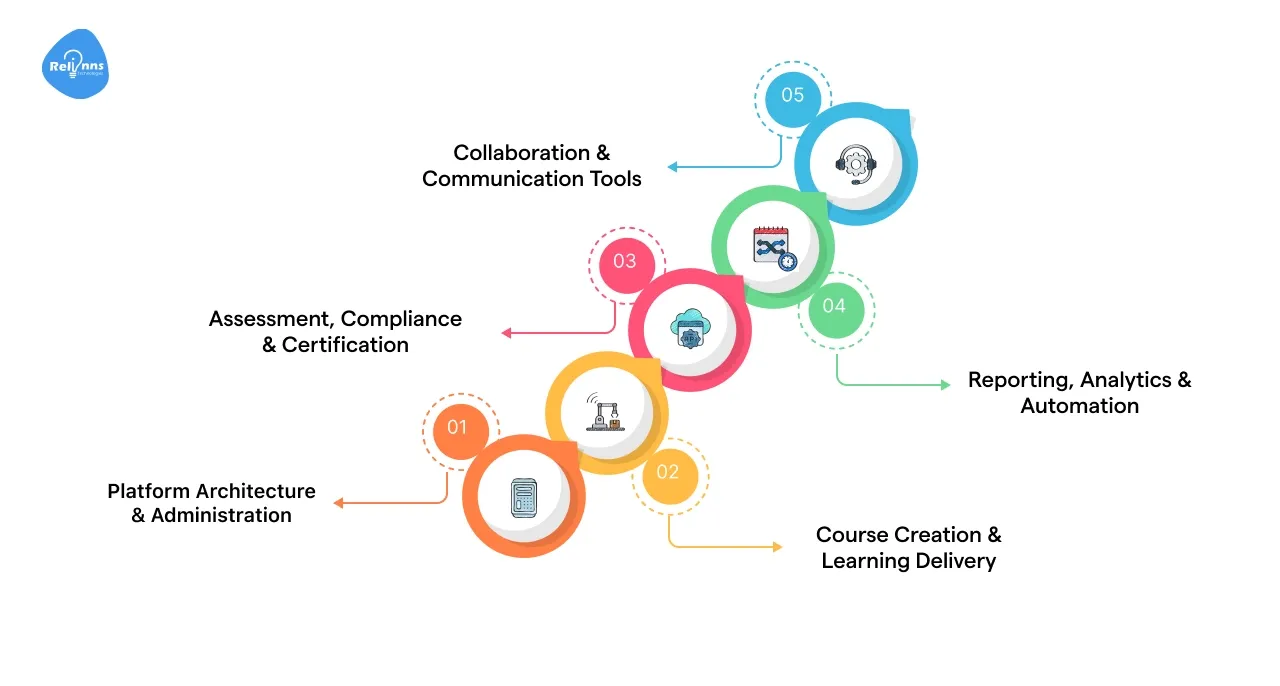
A SaaS learning management system integrates course creation, delivery, compliance tracking, and automation in a single cloud environment.
For institutions and enterprises operating under strict frameworks such as SaaS compliance for financial services, these platforms ensure secure learning, audit readiness, and consistent training delivery across teams.
Modern LMS platforms support secure, SaaS-based automation for financial services compliance, high availability, and centralized controls that operate across geographies and business units.
Multi-Tenant Architecture: Supports multiple institutions, departments, or branches under a unified LMS instance with shared updates, data isolation, and centralized governance.
User and Role Management: Custom roles, permissions, and automated enrollment rules ensure each learner accesses only role-specific training content. Ideal for regulated industries where SaaS regulatory compliance demands strict access controls.’
Integration & Authentication (SSO, HRIS, CRM): Connects seamlessly with identity providers like Azure AD and Google SSO, banking CRMs, HRIS systems, and compliance tools. This is essential for enterprises using SaaS compliance software to maintain secure and traceable training workflows.
Course Authoring and Content Library: Instructors can create multimedia courses, upload SCORM/xAPI content, reuse modules, and manage everything from a centralized content repository.
Learning Paths & Personalization: Structured sequences, prerequisites, and adaptive rules guide learners through role-based or skill-based journeys. Useful for regulated sectors where training requirements vary by job function.
Mobile Learning with Offline Access: Learners access training anytime, anywhere, with offline syncing that supports remote, field, or hybrid workforces.
Assessments and Evaluation Tools: Quizzes, exams, assignments, surveys, and question banks enable institutions and organizations to measure learning outcomes accurately.
Certificates and Compliance Tracking: Automated certificate issuance, renewal reminders, competency tracking, and audit-ready records.Supports regulatory compliance in banking and enterprise training where proof of completion is mandatory.
Audit Trails & Reporting Controls: Tracks every action, enrollments, completions, attempts, updates, which strengthens SaaS compliance for financial services and other regulated industries.
Reporting and Analytics Dashboard: Real-time insights on learner progress, completion rates, engagement, and assessment scores. Automated compliance reports support internal audits, external regulators, and training governance frameworks.
Workflow Automation: Auto-enrollment, training reminders, compliance alerts, and content updates ensure consistent delivery at scale.
This is core to secure SaaS-based automation platforms for financial services compliance, where timely training is non-negotiable.
Integrated Messaging & Announcements: Supports instructor–learner communication through messages, discussion boards, and broadcast announcements.
Feedback & Review Mechanisms: Learners can submit queries, receive instructor feedback, and participate in peer learning, strengthening the overall learning ecosystem.
With these features organized across architecture, delivery, compliance, and automation, a modern SaaS LMS provides a secure, scalable, and audit-ready environment.
This makes it a strong fit not only for education and enterprise training but also for highly regulated sectors where SaaS compliance for financial services, saas regulatory compliance, and secure data management are critical requirements.
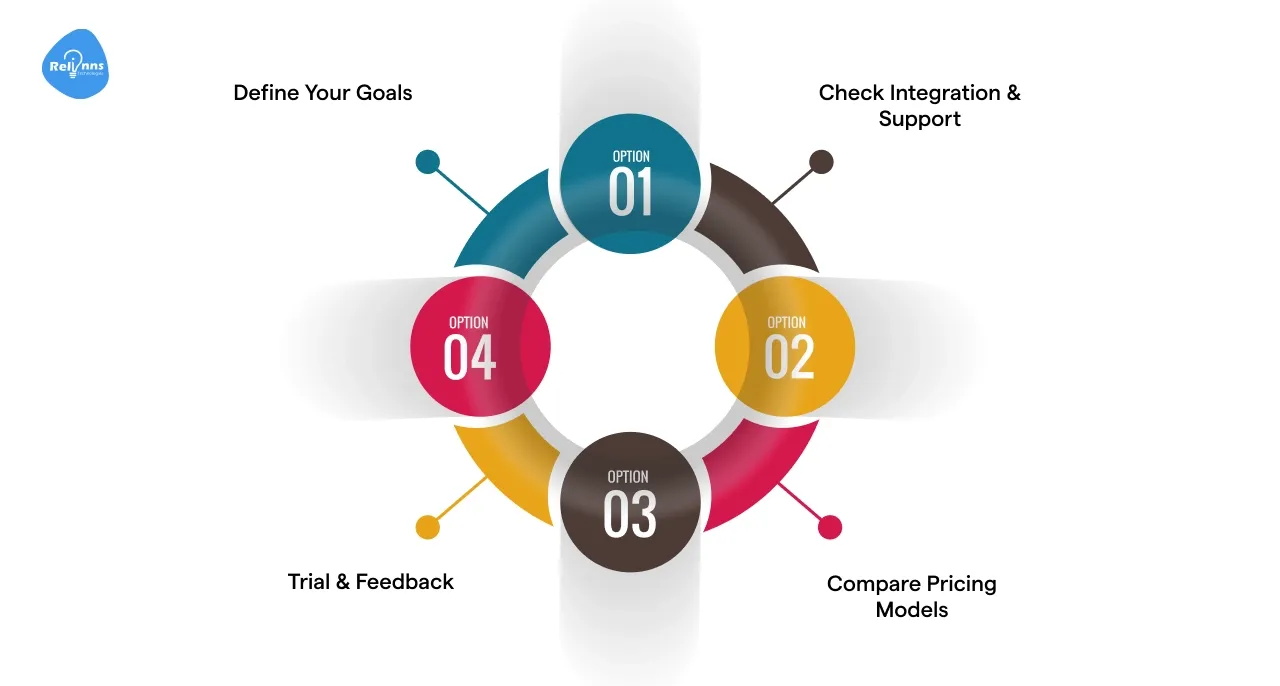
Choosing the right SaaS learning management system starts with clarity on goals and scale.
Evaluate features that align with your training model, ensure compatibility with existing systems, and analyze pricing for long-term value.
Before making a final decision, it’s essential to test shortlisted SaaS LMS platforms in real-world conditions.
Trials help validate functionality, surface usability issues, and ensure the system aligns with your team’s workflow and compliance standards.
Case 1: Large-Scale Corporate Upskilling: A recent McKinsey & Company survey shows that firms using cloud-based learning to upskill employees report better agility and workforce flexibility as roles evolve.
Case 2: Rapid Reskilling During Crisis: After COVID-19 disruptions, many companies adopted digital learning platforms and scaled skill-building; those that combined learning systems with governance reportedly achieved near-100% upskilling success.
Case 3: National-Level Digital Education Transformation: UNESCO documents how digital learning and public platforms expand access, support inclusive education, and ensure continuity during crises, highlighting the role of LMS-type systems at scale.
Case 4: Equity & Inclusion for Diverse Learners: According to OECD research, digital educational tools and learning-management systems significantly improve access and inclusion, helping underserved or remote student populations benefit from quality education.
Case 5: Unified Institutional Education Management at the Country Level: The OECD’s 2023 Digital Education Outlook identifies LMS and associated digital tools as foundational to national education systems for managing students, learning, assessments, and institutional governance at scale.
Relinns Technologies specializes in building custom cloud-based solutions, including SaaS learning management systems tailored to your needs.
Using agile development and low-code platforms, Relinns delivers scalable LMS software quickly and cost-effectively. We combine industry best practices with AI-enabled features to create engaging training environments.
Relinns has global development teams that provide 24/7 support and continuous improvement.
With Relinns as your partner, you get a SaaS learning management system that integrates seamlessly with your existing tech stack, adapts to future needs, and maximizes training ROI.
By partnering with Relinns, organizations benefit from expert consulting and custom SaaS learning management software development.
We combine technology, strategy, and support to ensure your SaaS LMS becomes a powerful engine for learning and development.
A SaaS learning management system is the modern way to deliver training and education efficiently.
By moving your LMS to the cloud, institutions and enterprises unlock flexible, scalable learning for all users. SaaS LMS platforms eliminate IT overhead, enable 24/7 access, and continuously update with new features.
When choosing a SaaS LMS, focus on your goals, needed integrations, and total cost of ownership.
For a tailored learning solution, Relinns offers development expertise to implement a robust SaaS LMS that fits your workflow.
Embracing a SaaS learning management system means investing in a future-proof training strategy that delivers measurable results.
A SaaS LMS typically has lower upfront costs since no hardware or infrastructure is required. Pricing is subscription-based, making budgeting more predictable. In contrast, self-hosted systems involve setup, licensing, server maintenance, and IT staffing, which increase long-term costs.
Yes, SaaS LMS platforms are ideal for remote and hybrid teams. They provide 24/7 access from any device and support real-time tracking, mobile learning, and automated updates, all crucial for distributed workforces.
Most SaaS LMS platforms can be deployed in days or weeks. With built-in templates, integrations, and cloud infrastructure, your team can quickly start creating and assigning courses without complex IT setup.
Absolutely. SaaS LMS platforms are designed to scale. Whether you train 50 or 50,000 users, the cloud-based infrastructure can expand without added overhead or performance loss.
Reputable SaaS LMS providers offer enterprise-grade security, including encryption, access controls, audit logs, and compliance with standards such as GDPR, SOC 2, and ISO 27001, to ensure your content and user data remain protected.
Some organizations may face limitations in custom coding or hosting sensitive data on third-party servers. Dependence on internet access and the provider’s roadmap may also be concerns, though most vendors offer strong reliability and uptime guarantees.
Start by defining your training goals, user types, and required features. Then compare platforms for usability, integration capabilities, scalability, and total cost. Trials and user feedback are essential to validate your choice.
Migration is typically straightforward, especially with providers that offer import tools or onboarding assistance. Most platforms support standard content formats (SCORM, xAPI, video, PDFs), and bulk upload features simplify the transition.
Subscribe to Our Newsletter
Get the latest business insights straight into your inbox.
Checkout our related blogs you will love.
Updated at Feb 11, 2026
15 min to read

Updated at Jan 2, 2026
7 min to read
Updated at Jan 2, 2026
12 min to read
Updated at Jan 2, 2026
11 min to read
Updated at Jan 2, 2026
9 min to read
Table of Contents
